Why Our Work Matters
Recovery does not happen in isolation, and neither does its impact. Public safety, family stability, health equity, restorative justice, food security, and a sustainably built home in Ward 8 are all part of the same story. Here is the evidence behind what we do, and why it matters to the people who invest in it.
FIND WHAT MATTERS TO YOU
Jump to a Topic
Public Safety
Why stability is one of the most effective violence prevention tools we have in Ward 8.
Family and Child Stability
How a parent finding recovery changes the odds for an entire household.
Health Equity
Why recovery from addiction and trauma is health care, not a separate issue from it.
Restorative Justice and Reentry
Why stability is cheaper, and more just, than incarceration.
Food Security
Why a reliable meal is part of what makes recovery possible.
Our New Home
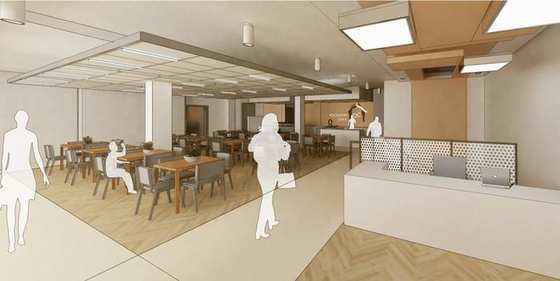
Inside the sustainably built home where recovery services come together under one roof.
Our Impact
The numbers behind what recovery looks like at Recovery Cafe DC.
The Research Behind Our Model
What recovery capital is, and how each of our programs helps build it.
Violence Has Not Left Our Neighborhood
Washington DC has made real progress against lethal violence, and that progress conceals the problem this work addresses. As of mid-2026, MPD data show homicides down roughly 40 percent year to date and overall crime down about 22 percent. Assaults with a dangerous weapon, the non-fatal shootings and armed attacks that fill the same emergency rooms and fuel the same retaliation cycles, rose about 44 percent over the same period. Fewer people are dying. Roughly the same number are being shot at, cut, and beaten with weapons.
The population most affected is narrow and identifiable. People ages 18 to 24 are disproportionately represented among both shooting victims and offenders, and violence concentrates within a small number of blocks in a defined set of neighborhoods, including the blocks around our new home in Historic Anacostia.
Sources: MPD year to date crime data and WUSA9, June 2026.
When a Parent Heals, a Family Stabilizes
Substance use and untreated trauma rarely stay contained to one person. They ripple through an entire household, and children are often the ones who carry the weight first. In Ward 8, children are removed from their homes at more than four times the rate of the rest of the District, a gap tied directly to the instability that untreated addiction and trauma create in families.
The pattern holds nationally too. Children of incarcerated mothers are four times more likely to end up in foster care than children whose mothers are not incarcerated, and Black children are nine times more likely than white children to have a parent in prison. Three in four incarcerated women are mothers. Every member who stabilizes at Recovery Cafe DC is a parent, grandparent, or caregiver who is more likely to keep their family together.
- ✓RCDC members regain the stability needed to reunify with children, maintain custody, or rebuild trust with family
- ✓Free membership means no cost barrier for parents who are already stretched thin
- ✓Weekly Recovery Circles build the accountability and consistency that family courts and caseworkers look for
Sources: Howard University News Service, Targeted or Neglected? The High Separation of Ward 8 Families (2026); Annie E. Casey Foundation, Children of Incarcerated Parents Fact Sheet
Recovery Is Health Care
Zip code still predicts lifespan in Washington DC more reliably than almost anything else. Residents of Historic Anacostia live an average of 28.9 fewer years than residents of Kent or the Palisades, a gap of nearly three decades within the same city. Ward 8 residents live roughly 15 fewer years than Ward 3 residents.
Roughly 80% of health outcomes are driven by social and economic conditions, not clinical care. Substance use disorder and untreated trauma are chronic health conditions, and left untreated, they compound every other health disparity a person is already facing, from opioid mortality to preventable hospitalization. Recovery Cafe DC treats recovery as primary health care, not an afterthought to it.
Sources: DC Office of the Chief Data Officer; AARP DC and Georgetown University (2023); DC Department of Behavioral Health; USC Schaeffer Center (2025); Greater Washington Community Foundation, DC Health Equity Report
You Cannot Recover on an Empty Stomach
Ward 8 is home to roughly half of DC’s food deserts and has only one full service grocery store for tens of thousands of residents. The ward’s poverty rate is 26.8%, nearly double the citywide rate, and its median household income of $31,139 is the lowest of any ward in the District.
The health consequences are measurable: 41.9% of Ward 8 residents are obese and 19.7% live with Type 2 diabetes, both well above citywide rates. Recovery from substance use disorder is significantly harder when a person is also food insecure. Every meal served at Recovery Cafe DC is one less thing standing between a member and stability.
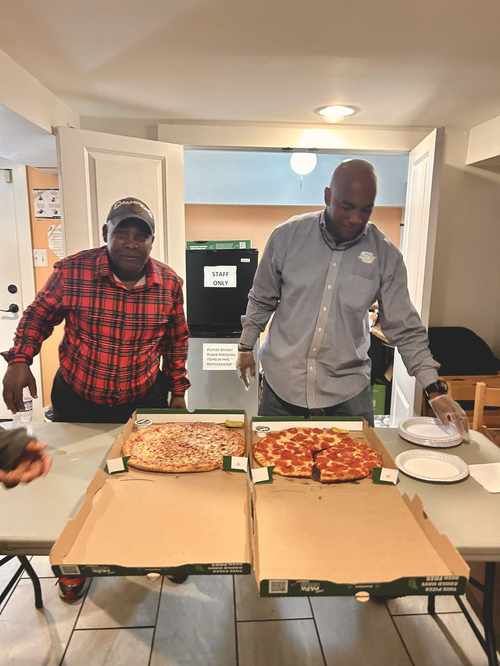
- ✓Free meals and snacks are part of every Recovery Circle and program day
- ✓Members build routine around a reliable place to eat, not just a place to recover
- ✓Food access removes one more barrier for members already managing recovery, work, and family
Sources: DC Policy Center; The Washington Informer (2024); National Library of Medicine / NIH (2021)
What We Do About It
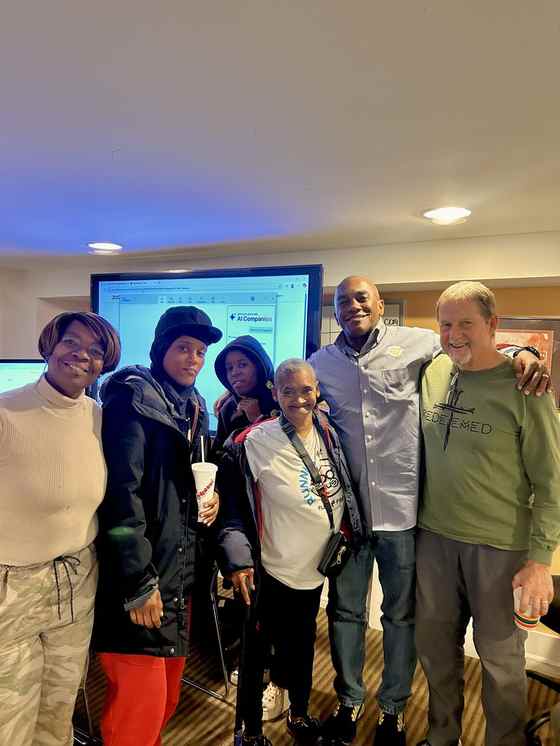
- ✓Recovery Circles: weekly small groups built on Loving Accountability, meeting the instability that drives risk with consistency and belonging
- ✓School for Recovery: life skills, job readiness, and stability-building classes
- ✓The Headwaters Program: mentoring at-risk young men ages 18 to 24, the exact age group named in DC’s own public safety data, in partnership with the Maya Angelou Schools
- ✓Community Connections: direct referrals to housing and employment, the concrete steps that keep someone connected to work instead of the block
How We Measure Recovery: Recovery Capital
Recovery capital is the standard framework addiction researchers use to explain sustained recovery: the breadth of internal and external resources a person can draw on, not just willpower or abstinence (White & Cloud, 2008). It is the same framework behind the wider Recovery Café Network. Every number on this page, and every program described below, maps onto one of its four parts.
Physical Capital
Community Meals and our Community Connections referrals meet the basic needs recovery requires: food, shelter, and physical health.
Social Capital
Recovery Circles and Membership itself replace isolation with Loving Accountability and relationships that hold.
Community Capital
Our new co-located home with Jubilee Jobs and Tzedek DC, and every referral partnership, builds the surrounding ecosystem recovery depends on.
Framed this way, a 95% relapse-prevention rate and a 97% increase in reported hope are not just satisfaction scores, they are recovery capital gains, the same outcome measure researchers and funders use to evaluate whether recovery is actually holding. Read more about the concept on our About page →
Source: White, W. & Cloud, W. (2008). Recovery Capital: A Primer for Addictions Professionals, and Granfield & Cloud, Coming Clean: Overcoming Addiction Without Treatment (1999).
One Address, Not Three Separate Trips
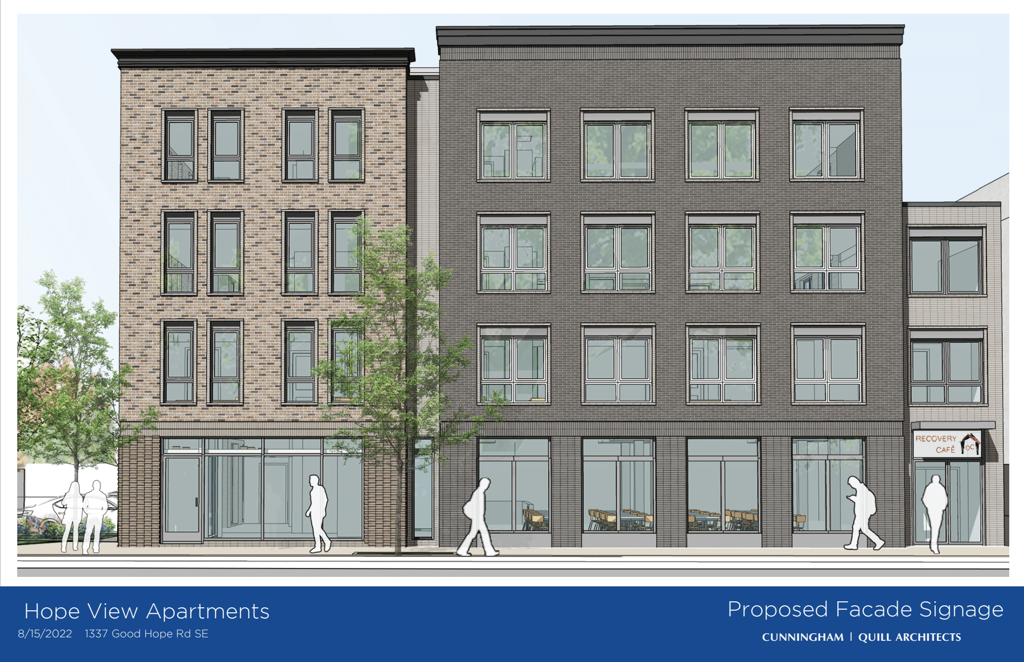
This fall, Recovery Café DC opens its permanently owned home at 1337 Marion Barry Avenue SE in Historic Anacostia, built with the Anacostia Economic Development Corporation. Jubilee Jobs, a 40 year DC employment organization that has placed more than 28,000 people into jobs since 1981, is moving in alongside us. Tzedek DC, which safeguards the legal rights and financial health of DC residents facing debt related problems, will also hold regular hours in the building.
For a Member, that means a Recovery Circle, a job readiness coach, and legal or financial help become reachable within the same walk, not three separate trips across a city where unstable housing, unreliable transit, and the daily demands of early recovery routinely break appointments. Co-location answers the hardest question in any referral partnership: whether someone will actually follow through on services located outside the trust and safety of the place they already come to. Here, they do not have to leave the building.
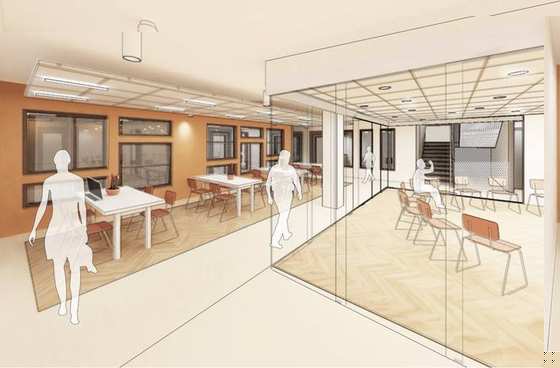
Built to Last, Built Responsibly
Recovery Cafe DC’s new home, Hope View Apartments and Recovery Cafe at 1337 Marion Barry Avenue SE, is being built to Enterprise Green Communities+ standards, a nationally recognized green building certification focused on health, durability, and lower operating costs for affordable housing. The building includes 42 units of affordable housing, 16 of them reserved for formerly homeless households, alongside 8,000 square feet of commercial space anchored by Recovery Cafe DC.
A sustainably built, permanently owned home lowers our long term operating costs and lets us reinvest savings directly into programs instead of rent. It also means Recovery Cafe DC is no longer dependent on a landlord’s timeline or a lease renewal to keep serving Ward 8.
- ✓Enterprise Green Communities+ standards for energy efficiency, indoor air quality, and durability
- ✓A permanently owned home ends the cycle of relocations and lease uncertainty
- ✓Co-developed by AEDC and T&H Investments, with predevelopment financing from LISC
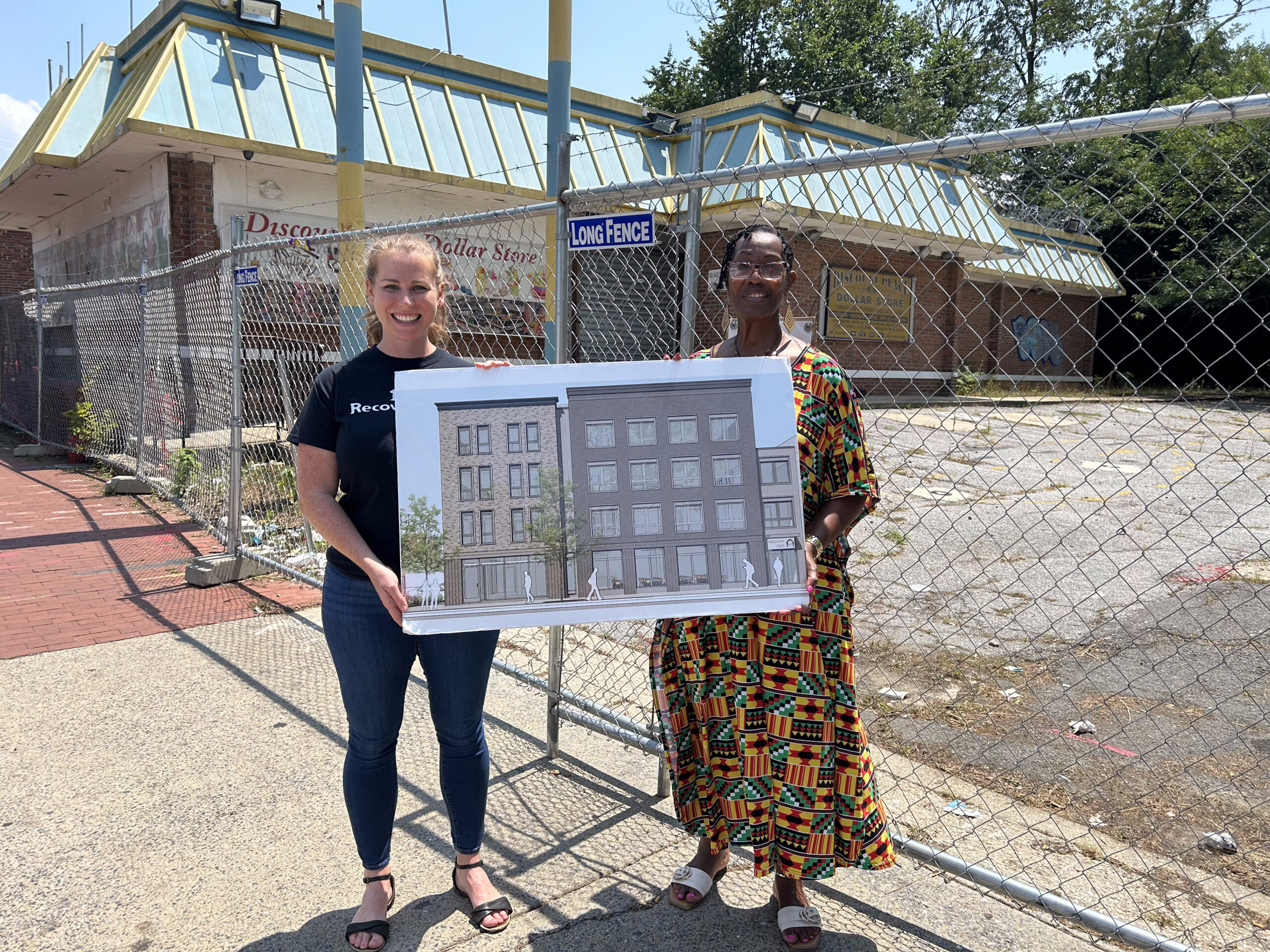
Source: LISC, Hope View Apartments and Recovery Cafe project profile
What Recovery Looks Like Here
Every number below is recovery capital growing, session by session, relationship by relationship.
- ✓95% of members say Recovery Café DC helps them prevent relapse
- ✓97% report increased hope since joining
- ✓90% of the members we serve have experienced homelessness, incarceration, or childhood trauma
Source: Recovery Café DC 2025 Member Survey. Hope is recognized by SAMHSA as a foundational principle of recovery.
Everyone Deserves to Thrive
Every statistic on this page has a name and a face behind it. These are the voices of the people who walk through our doors, in their own words.
Recovery Cafe DC gave me somewhere to belong on the hardest days, and somewhere to be proud of showing up on the good ones.
I did not just get sober here. I got my family back.
This is the first place that ever expected me to succeed instead of expecting me to fail.